

This summer I put together a video for Korum all about barbel fishing with meat and pellet on the river. It turned into one of those sessions where I had to think carefully about how to present a bait, how to keep everything simple, and how to work around tricky conditions. Looking back now, I wanted to share the thought process, the rigs, and a few of the little tweaks I made along the way, because they really did make a difference.

Low, Clear Summer Rivers
The summer had been a tough one. Hardly any rain meant the rivers were running very low and gin clear, and that made the barbel a lot harder to catch. In clear water like that, the fish are on edge. They spook off clumsy rigs, heavy tackle, or anything that looks out of place.
Because of that, I stripped everything back. I used my 12ft Allrounder rod, 10lb main line, and a four-foot length of Korum Smokeshield as a leader, attached with a simple double grinner knot. On the business end, I tied on a size 8 straight-point specimen hook. That was it – as simple and as inconspicuous as I could get it.

I wanted the flexibility to fish both meat and pellets without changing rigs, so I added a little hook stopper just above the hook. Onto that stopper I could pinch bits of tungsten putty, which meant I could adjust the sink rate of my bait on the fly, without using split shot that might weaken the line. That little tweak turned out to be really handy, especially when moving between different swims with different depths and flows.


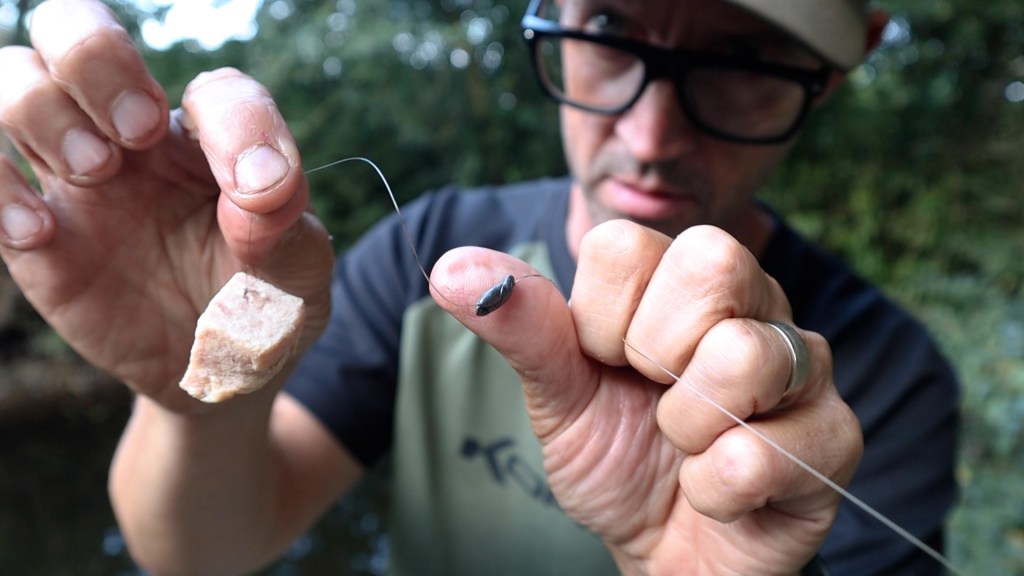
Switching Between Meat and Pellet
The beauty of this stripped-back rig was how quickly I could switch between baits. If I wanted to free-line a cube of meat, I just hooked it straight on. If the fish got wary of the meat – and trust me, they often did – I could slip on a pellet band, pop a pellet inside, and be fishing again in seconds.
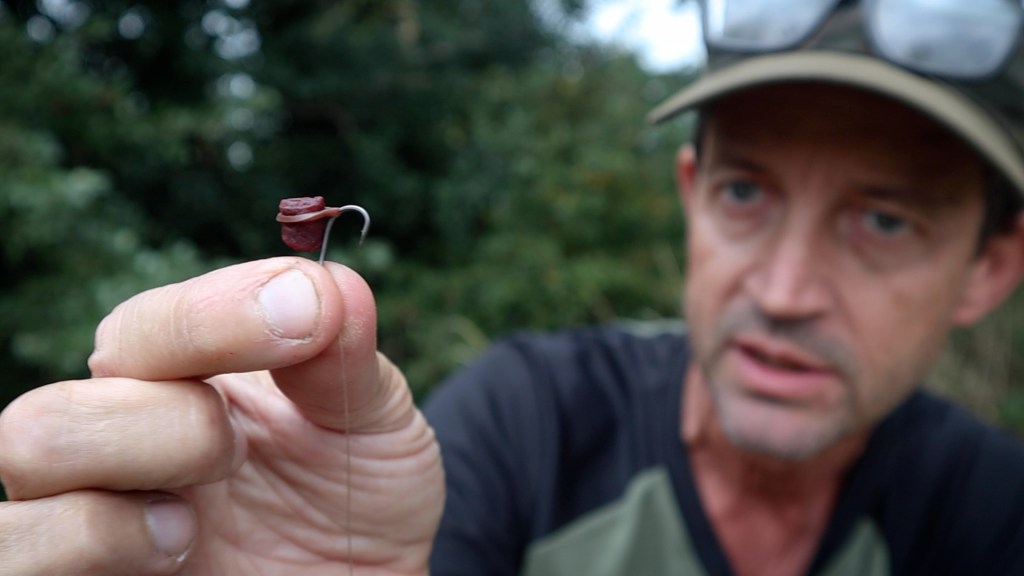
I found that the barbel sometimes backed off meat baits, almost as if they’d seen them too many times before. Pellets, on the other hand, often tripped them up. So being able to swap between the two without faffing around with different rigs gave me a big edge.
Yes, it meant I had to fish slightly smaller hooks than I’d normally use for meat, but the presentation was spot on for pellets, and the compromise worked out well overall.
Making Meat Prep Easy
Back in the day, chopping meat for fishing was a proper pain. I’d be trying to cut cubes with a bait box lid and nearly lose my fingers in the process. These days, meat cubers make barbel fishing with meat ridiculously easy. I used the large Korum cuber, and in no time I had a box full of neat, uniform cubes that looked the part and went onto the hook perfectly.

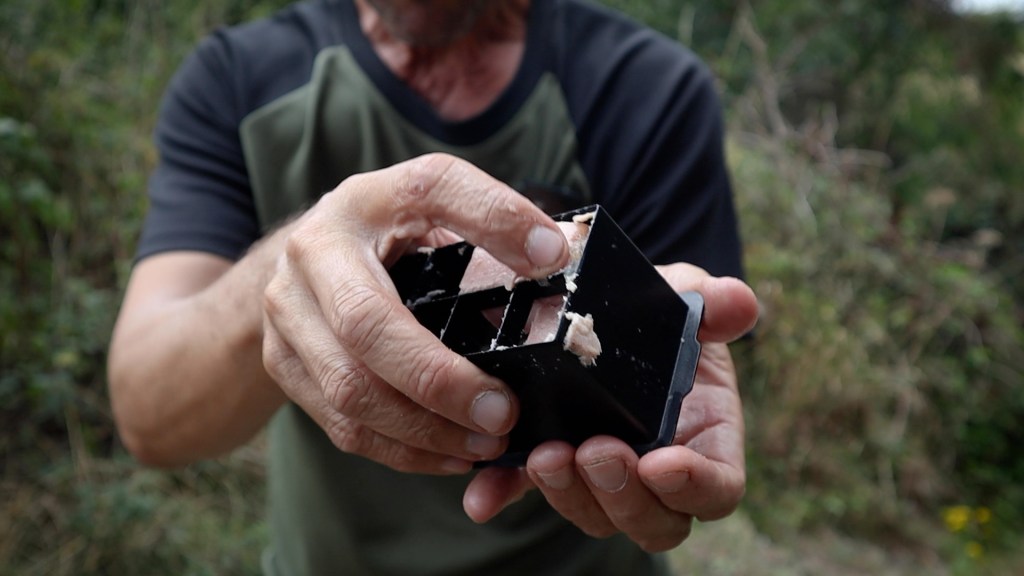
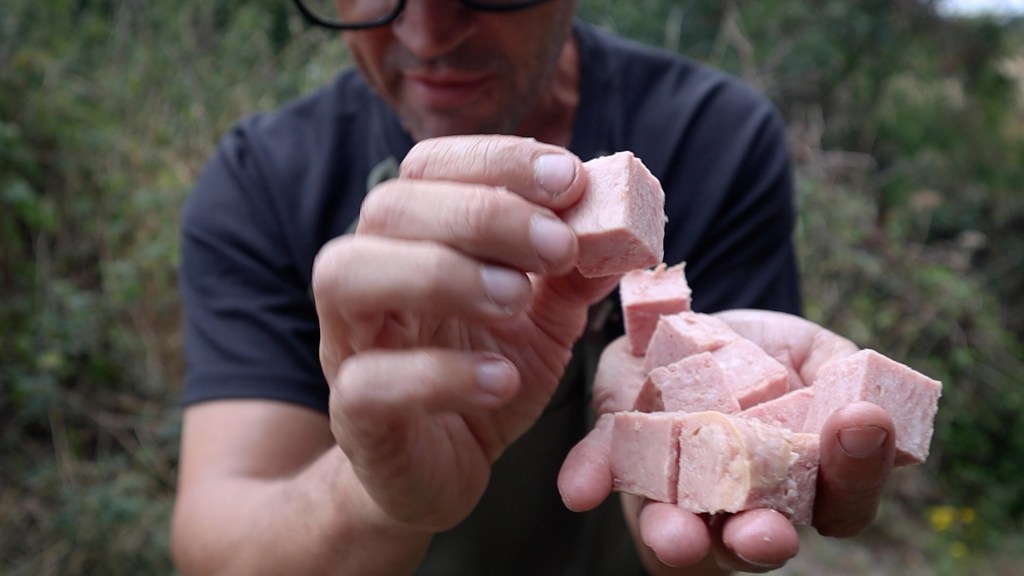
That meant I could focus on the fishing, not the prep, and when you’re moving from swim to swim looking for fish, that really does help.
Swim Hopping and Stealth
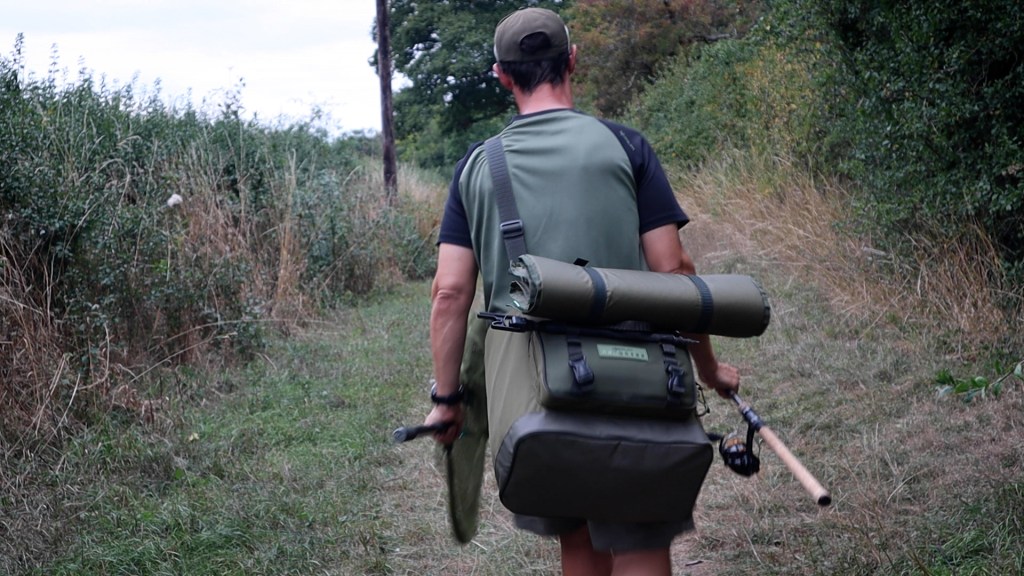
Because the water was so clear, I had to move around a lot. Some swims looked good but held nothing. Others had fish, but they spooked easily. The trick was to sit well back, avoid staring into the water too much, and roll baits under bushes and canopies as subtly as possible.

In some of the tighter swims, I actually found the 12ft rod a bit of a struggle – a shorter rod would have been handier for poking baits into the little holes and undercut banks. Still, with careful casting and by adding or removing bits of tungsten to adjust the sink rate, I was able to get baits into the right spots.
Chub and Barbel
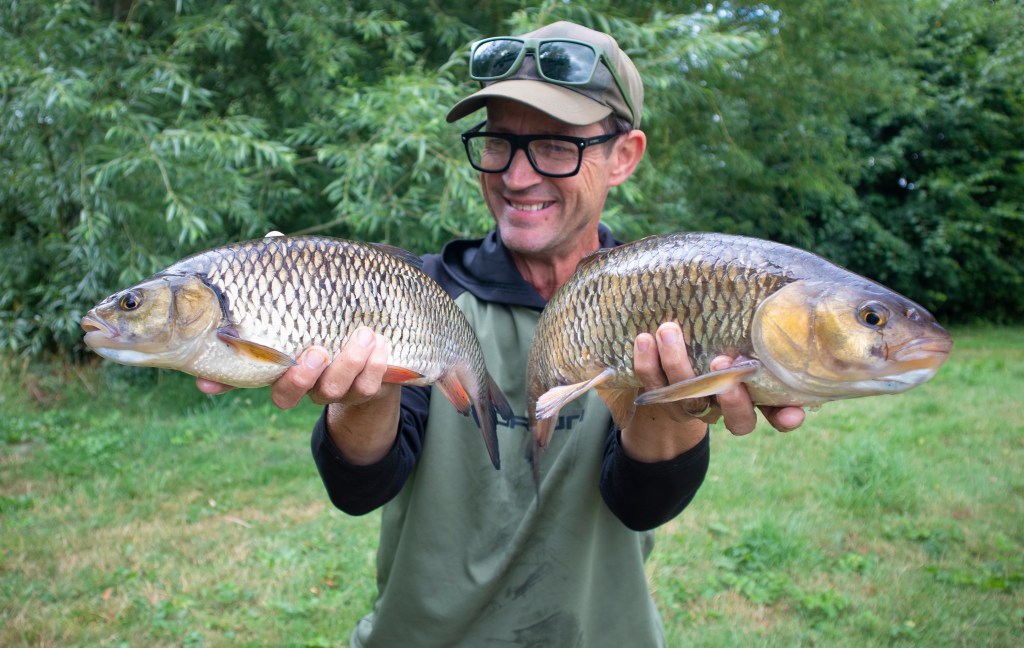
As often happens on these small rivers, the chub got to the bait first more times than I’d have liked. They can be greedy little things and they smash a cube of meat without hesitation. But I wasn’t complaining too much – they’re cracking fish in their own right, and they kept the rod tip moving while I waited for the barbel to show.
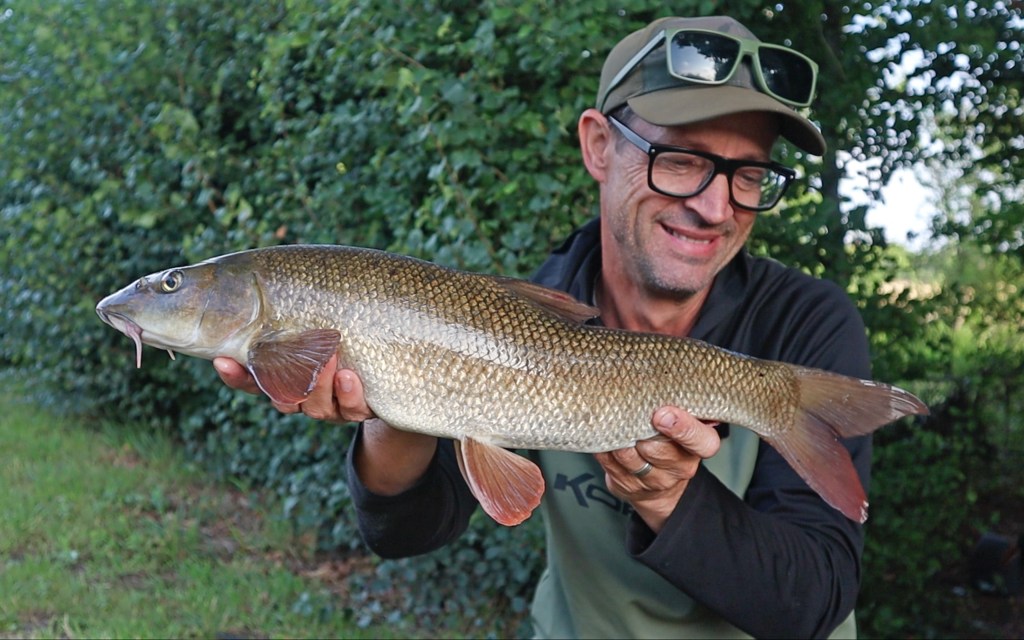
Patience paid off though. After working through plenty of chub, I finally slipped the net under a chunky barbel. It wasn’t the biggest fish in the river, but given the conditions it felt like a real result. The fight was powerful, the fish stocky, and as always I made sure to give it plenty of time to rest in the net before release, especially in the warm water.
Stepping Up the Gear
In the more confined, snaggy swims, I stepped things up. Out came the heavier 2lb test curve rod, 12lb line, and a simple lead clip setup with a short hooklength. I could still switch between meat and pellets on the hair, but the stronger tackle gave me more control in tight spaces where a fish could easily snag me up.

This was especially important when fishing under heavy canopies. The barbel love to hug those features, and you don’t get much margin for error when they bolt. Stronger gear meant I could apply pressure straight away and stand a chance of steering them into open water.
Meat Stops and Quick Stops
One other little detail that made life easier was how I mounted the meat. Instead of the old-fashioned boilie stops that tend to cut through soft bait, I used the Korum Meat Quickstoppa Kit. They’re simple but clever – basically a little tube you push through the cube of meat, which creates a solid core for the hair to sit in. That way the hookbait stays intact for much longer.

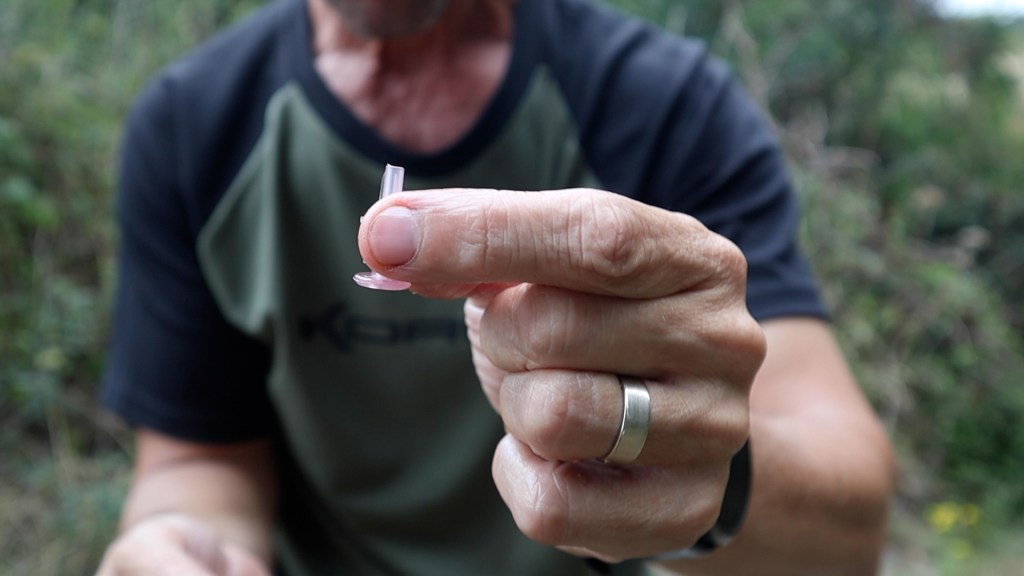

For an even quicker option, there’s the quick stop system, which uses a needle to push the stop through the cube. Both methods worked well, and both made meat fishing less frustrating.

Barbel Fishing with Meat and Pellet – that’s a wrap!
By the end of the session, I’d had a good mix of chub and barbel. The chub were very active, but switching between meat and pellets, adjusting the rigs on the fly, and keeping everything as simple and subtle as possible brought enough barbel to the net to make it all worthwhile.

Looking back, the biggest lessons were:
- Keep rigs stripped back and inconspicuous in clear water.
- Use tungsten putty to fine-tune the sink rate instead of split shot.
- Stay mobile – if there are no fish in front of you, move on.
- Be ready to switch between meat and pellet quickly.
- Step up the tackle in snaggy or confined swims.
All in all, the tactics worked well despite the tough conditions. It proved to me again that simple rigs, a bit of thought about presentation, and the willingness to adapt are often the key to catching barbel in tricky summer river.
